Unlocking Voice: Real-time AI Conversation Insights
Published 2025-12-14 · Updated 2026-09-27
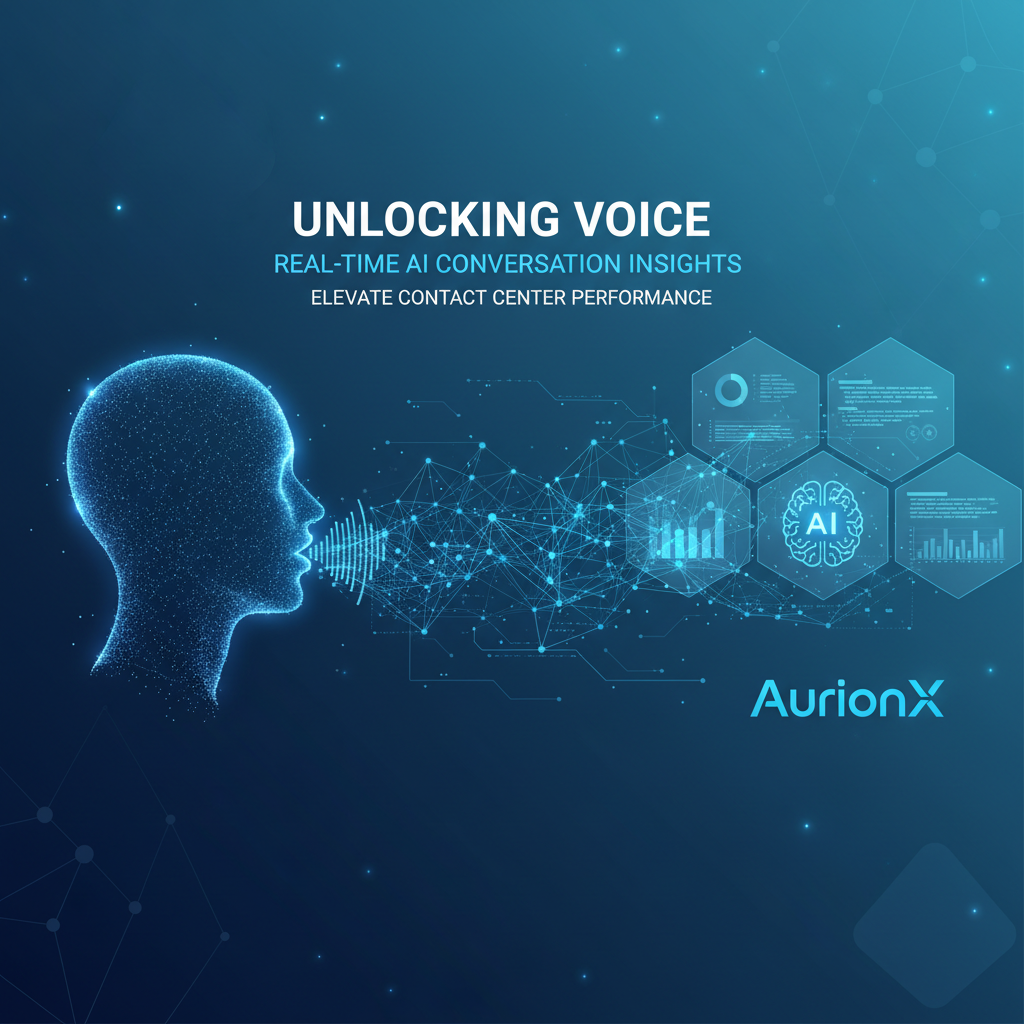
The pulse of a modern contact center isn’t just in the calls answered; it’s in the data flowing during and immediately after those interactions. As we move through December 2024, the distinction between a rudimentary chatbot and a sophisticated conversational AI voice agent isn’t merely about the ability to understand speech, but the capacity to extract and act upon real-time analytics and insights from AI conversations.
This isn’t about post-mortem reports; it’s about having a digital ear to the ground, understanding customer sentiment, identifying emerging issues, and optimizing operational workflows as they happen. The immediacy of these insights allows for proactive adjustments, transforming potential problems into resolved successes, often before a human agent ever needs to intervene.
This immediate feedback loop doesn’t just improve individual customer experiences; it illuminates broader trends that can reshape product development, marketing strategies, and even internal training programs. The ability to see beyond the surface of a conversation, to understand the nuanced ‘why’ behind a customer’s query or a transaction’s success, is what propels a contact center from good to exceptional.
The Anatomy of Real-time Conversational Data
What precisely constitutes ‘real-time conversational data’ when we talk about AI voice agents? It’s far richer than just a simple transcript. Simultaneously, a complex engine is analyzing various layers of that interaction:
- Sentiment Scores: Is the customer expressing frustration, satisfaction, or neutrality? This isn’t just keyword spotting; it’s understanding emotional tone from speech patterns and word choice as the conversation unfolds. A sudden dip in a sentiment score can trigger an alert, prompting an immediate escalation or suggesting a different conversational path.
- Intent Detection Confidence: How sure is the AI agent about the customer’s goal? If confidence levels are low for specific intents, it highlights areas where the AI’s natural language understanding (NLU) model might need refinement, or where the customer’s request is unusually complex.
- Topic Clusters & Keywords: Beyond the primary intent, what secondary topics are surfacing? Are customers frequently asking about a newly launched product, encountering issues with a particular service, or mentioning a competitor? These spontaneous clusters can reveal organic trends before they’re officially logged as issues.
- Talk Time & Silence Gaps: Precisely measuring the duration of speech for both the customer and the AI, along with the periods of silence, offers insights into conversational flow and efficiency. Excessive silence might indicate the AI struggling to respond, or the customer grappling with information.
- Resolution Path Tracking: For every interaction, the system can map the journey taken: which FAQs were accessed, which data points were verified, whether a knowledge base article was referenced, and ultimately, if the stated intent was resolved.
These data streams provide a granular, moment-by-moment understanding of the interaction, offering a comprehensive X-ray view of performance that was previously unattainable with traditional call recordings and manual analysis.
Moving Beyond Post-Mortem: Why Real-time Matters
Historically, understanding customer interactions was a reactive process. Call recordings were sampled, transcribed, and analyzed hours or even days later. While valuable, this retrospective approach makes it challenging to intervene or adapt during critical moments.
Real-time analytics flips this paradigm. It enables:
- Dynamic Escalation: If a customer’s sentiment rapidly deteriorates or the AI detects an unresolvable complex issue, the system can automatically flag the interaction for a human supervisor, or seamlessly transfer the call with a warm hand-off, providing all the prior interaction context.
- Proactive Problem Detection: Imagine a sudden spike in calls related to a specific product flaw, evidenced by real-time topic clusters and negative sentiment. This immediate insight can trigger an alert to the product team, allowing for a swift investigation and potentially a system-wide announcement, mitigating widespread dissatisfaction.
- A/B Testing & Optimization: AI voice agents can be deployed with different conversational flows or phrasing variations. Real-time metrics allow businesses to continuously A/B test these iterations, identifying which approaches lead to higher satisfaction, faster resolution times, or better conversion rates, and then instantly apply the winning strategy across all agents.
- Training & Coaching Opportunities: Supervisors can monitor live interactions, observing how AI agents handle various scenarios. This provides invaluable data for refining AI training models, identifying gaps in knowledge bases, and even coaching human agents on best practices when they do intervene.
Actionable Insights: From Data Point to Business Value
Raw data is only half the story; true value emerges when that data transforms into actionable insights.
Consider these practical applications:
- Streamlining Self-Service: If real-time data consistently shows customers abandoning self-service flows at a particular step, it points to a friction point. The business can then redesign that specific step, clarify instructions, or offer more robust AI assistance, increasing the success rate of self-service. This directly improves operational efficiency and reduces reliance on human agents, a key focus for contact center innovation.
- Enhancing Agent Performance (Human & AI): For human agents receiving escalations, the AI provides a complete transcript and summary of the pre-processed interaction. This eliminates repetitive questioning and empowers the human agent to jump straight to problem-solving. For AI agents, these insights directly feed into model training, teaching the AI to better understand and respond to new variations of customer queries.
- Identifying Product/Service Gaps: Persistent negative sentiment or repeated queries about a feature that doesn’t exist are clear indicators from the customer base. These aren’t just contact center issues; they are vital market signals for product development teams, allowing them to prioritize features or address pain points before they escalate.
- Optimizing Marketing Campaigns: If a marketing campaign promises a certain benefit, but real-time conversations reveal customer confusion or dissatisfaction regarding that promise, it’s an immediate signal to adjust campaign messaging or even the offering itself. The feedback loop is instantaneous, not delayed by weeks of survey results.
The Future is Proactive, Not Reactive
The integration of sophisticated real-time analytics with conversational AI voice agents marks a significant evolution in contact center management. It shifts the operational paradigm from reacting to problems after they’ve occurred to proactively preventing or resolving them as they emerge. Businesses no longer need to rely on assumptions or delayed feedback; they have a living, breathing understanding of their customer interactions.
This continuous loop of engagement, analysis, and optimization is not just a technological advancement; it’s a strategic imperative. As customer expectations continue to rise, the ability to anticipate needs and resolve issues with unparalleled speed and accuracy will be the hallmark of industry leaders. Platforms like Komms are at the forefront of this transformation, providing the tools necessary to listen, learn, and lead in the new era of intelligent customer engagement.
Ready to transform your contact center with real-time AI conversation insights?
From the editors: AurionX is now part of KX21, Inc., which operates this directory. KX21 also builds Komms, an AI voice agent built as a script, at $0.08 a talk minute all in. Compare it with other AI voice agents in the directory.